When I began working with Naked Root, nothing appeared broken.
The product worked. Customers were buying. Revenue existed.
And yet, the system behaved in a familiar way.
Growth required continuous effort.
Momentum appeared only when marketing pressure increased.
The moment that pressure slowed, activity declined.
Nothing collapsed.
But nothing carried weight.
The underlying problem was not the product.
It was the role the product occupied in the decision.
The planter followed the plant.
And as long as it did, demand could not sustain itself.
For months, revenue hovered within the same narrow range. Some months were stronger, some weaker, but the pattern remained unchanged: every step forward required effort.
The instinct inside the company was predictable.
Optimize flows.
Push ads harder.
Increase urgency.
The instincts were rational.
They were also insufficient.
Because the constraint lived deeper.
The product had been mentally filed as an accessory.
Subconsciously, the buying decision followed a simple logic:
“I have a plant. I need a planter.”
In that sentence, the role is already defined.
The planter follows. It completes. It does not lead.
And once a product enters the market in that role, the economics are largely set.
It is compared.
Negotiated.
Dependent on incentives.
Growth does not emerge on its own.
It has to be pushed.
At that point, the question was no longer how to improve marketing.
It was whether the role the product occupied allowed the system to behave differently at all.
What follows is not a sequence of tactics.
It is a structural shift.
Not how the product was marketed,
but what it was understood to be.
Because once that changes, everything that follows reorganizes around it.
This pattern is not specific to plant care.
In some cases, it doesn’t just change a product.
It changes the structure of an entire industry.

In 1998, Apple did more than redesign a computer. It altered the psychological contract between object and environment.
Until then, the personal computer was designed for concealment. Beige casings. Opaque shells meant to disappear beneath desks. Functionally competent, culturally mute. The machine existed as infrastructure — tolerated, not chosen.
The iMac reversed that logic.
It moved the computer from under the desk to on it. From background utility to visible presence. That relocation was not aesthetic; it was economic. Objects that remain visible participate in identity formation. Hidden objects compete on specification and price.
Transparency was the first philosophical move.
By revealing internal structure, Apple reduced cognitive opacity. Humans trust what they can mentally map. When engineering becomes legible, perceived integrity increases. The object shifts from a sealed industrial artifact to something authored. Authorship resists substitution.
Opacity implies commodity.
Legibility implies intention.
But translucency carries a risk.
The moment it reads synthetic, it collapses into toy logic. A transparent shell without grounding appears decorative rather than structural.
Apple avoided that outcome by rooting color in the natural world — not as ornament, but as an anchor the nervous system already understands.
Color then amplified the shift — but not arbitrarily.
Bondi Blue. Strawberry. Tangerine. Grape. Lime.
These were not synthetic neon statements. They referenced fruit, water, sky — ecological anchors rather than industrial pigments. Apple did not choose tech colors. It chose natural metaphors. That alignment softened translucency and grounded the machine in biophilic perception rather than mechanical coldness.
Persistent visual elements in domestic space absorb symbolic weight. Humans respond to cues that mirror natural environments. Objects that remain visible inside a home inevitably become expressive.
Apple embodied these principles with the iMac.
The result was not a colorful computer.
It was a reclassified object.
The iMac stopped behaving like hardware and became presence — a spatial signal rather than a hidden appliance. And once role changed, economics followed.
Specifications did not justify the margin expansion.
Role did.
The same pattern existed in plant care.
The planter category had been trained to disappear.
Neutral palettes. Matte finishes. Designed to sit beneath the plant, not beside it. The container was infrastructure — a silent support system measured by how little it interfered.
That invisibility felt safe.
It was also the ceiling.
The engineering at Naked Root was not the issue. The dual-shell breathing system was patented and solved a problem no other planter could — root rot.
But it was hidden.
Hidden engineering reads as commodity.
Role had to change.
But that shift could not be imposed at once.
Before I arrived, yellow had already been tested. It failed.
The conclusion was that the market did not respond to color.
I disagreed.
Color had not failed.
Framing had.
A saturated plastic yellow inside a neutral, utility-driven hierarchy reads as decorative deviation. Without a shift in role, color becomes ornament. Ornament in a utility frame feels optional. Optional products are negotiated.
The lesson was not to avoid yellow.
You cannot introduce a new signal into an old hierarchy and expect it to carry weight.
The hierarchy itself had to be rebuilt.
Before translucency.
Before permanent color systems.
Before reclassification.
There had to be proof.
Not proof that color could sell.
Proof that reward logic could shift.
At the time, revenue was driven by incentive.
A percentage discount carried the conversion load — efficient in the short term, corrosive in the long term.
Discounts train negotiation.
Negotiation compresses pricing power.
Pricing power determines whether a brand becomes premium or remains promotional.
If Naked Root was to become a lifestyle brand rather than a utility supplier, the reward system had to change.
The discount disappeared.
In its place, we introduced something structurally different:
A limited-edition object.
Not for sale.
Earned through participation.
The first installation aligned with a moment when the cultural narrative of love was already heightened.

Released during Valentine’s Day, Velvet Red entered a field already saturated with intimacy, ritual, and symbolic exchange. That timing reduced resistance. It aligned the brand with a register the culture was already reinforcing.
All orders received a 3" Velvet Red planter. Orders above $125 received an additional 5" flagship edition.
The shift was subtle on the surface and decisive underneath.
The customer was no longer being pushed to buy more.
She was being invited into something.
Plant care, at its core, is an act of nurture.
That sensitivity extends into aesthetics — texture, tactility, food.
In a category rooted in nature, indulgence had to feel organic rather than ornamental.
Red in plastic reads synthetic.
Red in velvet reads edible.
The reference point was not fashion. It was sensory memory — velvet red cupcakes, dense, tactile, indulgent yet warm. The pigment required calibration. Too bright and it felt artificial. Too dark and it lost vitality. Iteration continued until the red carried depth without shouting.
The objective was not visibility.
It was dimensional anchoring.
When an object can almost be tasted, it anchors deeper in memory.
Language reinforced the same structure. The campaign centered on “love” — not as sentiment, but as restoration. Emails were written as love letters. Visuals showed ritual. The founders participated in their own Valentine’s traditions.
The audience began mirroring the vocabulary.
When customers repeat your language, positioning has shifted.
Velvet Red was not decoration.
Velvet Red was not decoration.
It was proof that the planter could carry symbolic weight.
Revenue did not dip when the discount disappeared.
It went up.
The second installation entered a different cultural field.

Released around Mother’s Day, Lavender Haze occupied a moment defined by generational reflection. That timing allowed the object to resonate across age brackets rather than within one.
It could not resemble a permanent line.
It had to stand alone.
Lavender carries layered meaning. It signals summer. It signals refinement. It signals scent. In Southern France, fields of lavender are expansive and composed.
Composition matters in a premium environment.
The pigment required restraint. Too pale and it disappeared. Too ornamental and it felt trend-driven. Iteration moved between extremes until the tone carried softness with authority.
The name carried resonance across generations — familiar to mothers, legible to daughters — reinforcing inclusion rather than segmentation. Music became part of the sensory architecture. Visual, linguistic, and auditory cues aligned.
The objective was not novelty.
It was atmosphere.
Atmosphere changes how an object is perceived inside a home.
By this point, reward logic had shifted. The audience no longer waited for discounts. They anticipated moments.
Anticipation compounds.
Urgency erodes.
Lavender Haze was not a color variant.
It was structural validation.
Execution required synchronizing reward architecture, cultural timing, sensory calibration, and narrative language.
Once that coordination proved stable across two culturally amplified moments — one centered on romantic belonging, the other on generational continuity — permanence became viable.
Only then did Clearly Colorful make structural sense.
At this point, two things had been proven.
The object could carry symbolic weight.
And the system could change how customers entered the decision.
The remaining question was how to make that shift permanent.
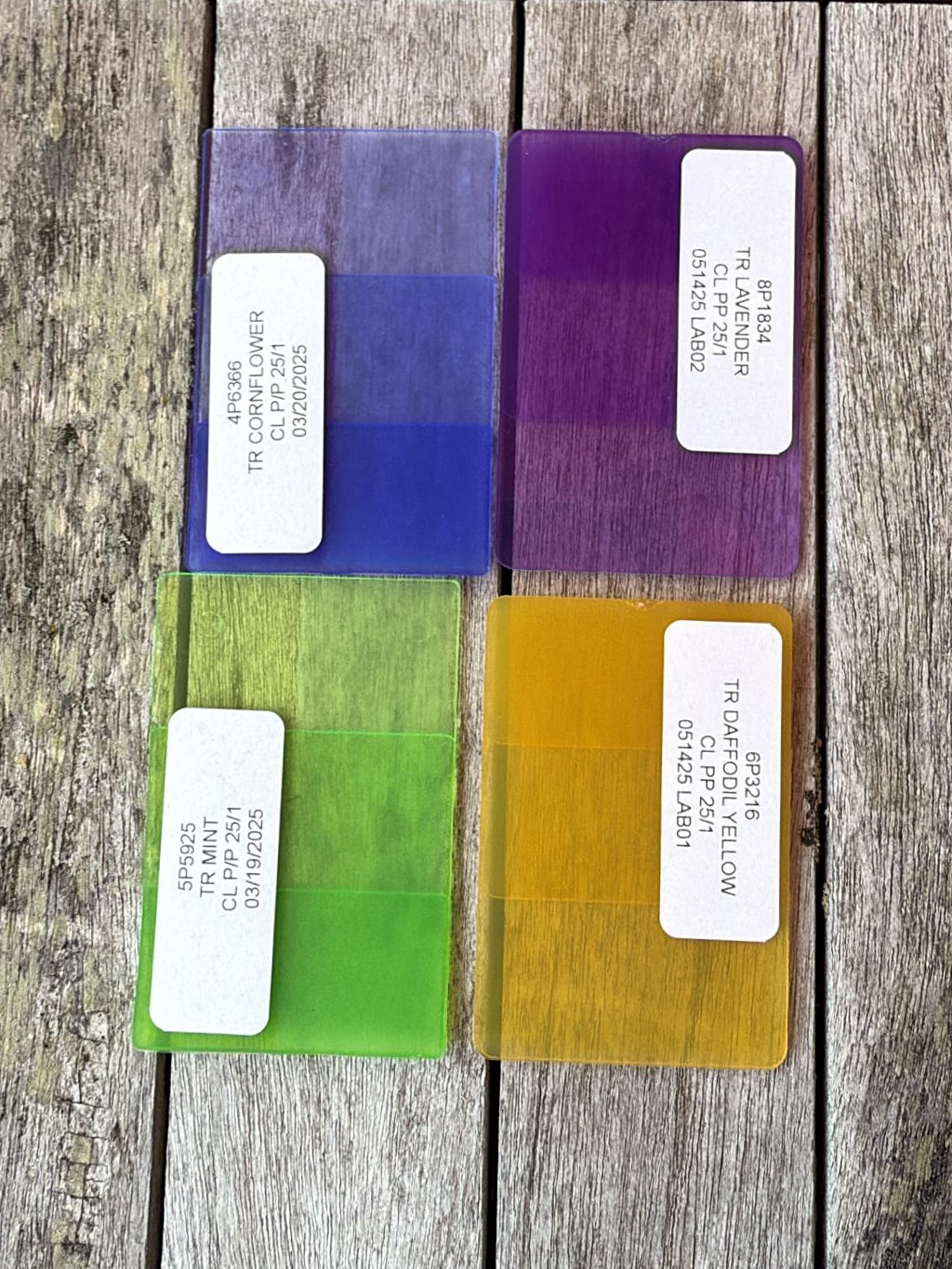
The planter’s engineering advantage had always existed.
What had not existed was its visibility.
The dual-shell system solved a real problem in plant care: roots require both moisture and oxygen. The inner shell allowed water to drain and air to circulate, recreating the wet–dry cycle plants experience in nature.
Functionally, the design was already intelligent.
Visually, that intelligence remained hidden.
Opaque shells concealed the architecture. The product worked better than alternatives, yet it still looked like a container.
When form hides function, objects feel interchangeable.
The solution was not to add decoration.
It was to reveal the system.
Translucency surfaced what had previously been concealed: the breathing architecture, the water level, the relationship between soil, moisture, and air. The planter no longer behaved as a sealed vessel. It behaved as a visible system.
That shift aligned appearance with operation.
When form and function converge, the object begins to feel authored rather than assembled.
The move required restraint. Early prototypes were rejected. Too much transparency exposed residue and reduced perceived quality. Too little obscured the architecture again. Pigment density, opacity thresholds, and surface finish were calibrated through multiple iterations until the structure remained legible without feeling exposed.
Once balanced, translucency did something simple and powerful.
It allowed the planter’s intelligence to be seen.
And when intelligence becomes visible, substitution weakens.
Once the object itself carried visible intelligence, the next question became how customers would enter the system.

Color could not behave as a variant.
Variants belong to products that remain interchangeable.
If the planter was to become central rather than supportive, color had to operate differently.
It had to become territory.
The category typically organizes planters by size, material, or utility. That structure reinforces the idea that the container is secondary to the plant.
But once the object carries symbolic weight, the entry point must change. Instead of asking:
“I have a plant. Which planter fits it?”
the system invites a different question:
“What kind of space do I want to live in?”
Color became the doorway to that decision.
Breaking Dawn.
Blue Heaven.
Violet Mist.
Green Meadow.
Desert Rose.
These were not decorative labels.
They were environments.
Each name referenced a natural moment — sky, atmosphere, landscape, bloom. Natural metaphors stabilize expressive objects because they anchor them in ecological memory rather than seasonal fashion.
A visitor no longer encountered a grid of products.
They entered a world.
I crafted the following landing page prototypes to make the color worlds mentally tangible when presenting the concept to the owners:
Breaking Dawn
Blue Heaven
Violet Mist
Green Meadow
Desert Rose
Breaking Dawn
Blue Heaven
Violet Mist
Green Meadow
Desert Rose
These pages were not SKU catalogs.
They were spatial propositions.
The decision tree inverted.
Instead of selecting a planter for a plant, the visitor first chose an atmosphere — and then asked which plant belonged inside it.
Once color behaves as territory, the object stops functioning as an accessory.
It becomes part of the room.

Clearly Colorful launched shortly after my departure.
But the structural groundwork — naming logic, territorial framing, transparency calibration, emotional validation through limited editions — had already been installed.
Centrality is not declared.
It is governed.

After Velvet Red and Lavender Haze proved that a planter could carry symbolic weight, the instinct inside the company was predictable.
Another color.
Another campaign.
The logic was understandable. Both releases had performed strongly. Color had proven its ability to move the object beside the plant rather than beneath it.
But repeating the mechanism would have weakened the system that had just been established.
Color works as a structural signal only while it remains meaningful. When every moment introduces another color, distinction collapses. The palette becomes novelty rather than territory.
At the same time, the permanent color worlds of Clearly Colorful were approaching release. Introducing another chromatic campaign would have forced two systems to compete for attention — the temporary campaign and the permanent line.
If both speak in the same language, both lose clarity.
So instead of expanding the spectrum, I stepped outside it.
The Starry Night was designed as a deliberate non-color.
No placement within the chromatic system.
No competition with the palette it was meant to protect.
The object did not exist to extend the line.
It existed to safeguard its hierarchy.
But the decision served another function as well.
Across the preceding months, the emotional register of the brand had been rising.
Velvet Red introduced belonging at a moment culturally defined by love. Lavender Haze extended that belonging across generations, aligning with the reflective tone of Mother’s Day.
The Starry Night became the final note in that progression.
Not a color.
A symbol.
Something that felt less like a product release and more like an object that appeared.
The reaction it was designed to create followed a deliberate sequence.
First:
“What is this?”
Then:
“How do I get it?”
Access was structured accordingly.
The object was not visible within normal navigation. It lived behind a hidden landing page, reachable only through deliberate entry. It could not be purchased directly. Participation in the system was required.
That structure changed the behavioral contract.
Priced products invite comparison.
Discounted products invite negotiation.
Earned objects invite commitment.
Material execution followed the same philosophy of restraint.
Metallic particulates behave unpredictably in injection molding. Flake size alters flow. Density changes reflection. Early samples scattered light too aggressively, reading as decorative glitter rather than depth.
Those runs were rejected.
Iteration continued until the surface behaved differently under domestic lighting — atmospheric rather than reflective, quiet rather than ornamental.
The result was subtle enough to remain believable inside a home, yet distinctive enough to feel separate from the chromatic worlds that surrounded it.
The Starry Night did not expand the palette.
It preserved it.
At the same time, it deepened the emotional architecture that Velvet Red and Lavender Haze had begun.
For the first time, the system expressed its full contract with the customer:
Not discounting.
Not urgency.
Participation.
Product, access, narrative, and ritual aligned.
For a deeper breakdown of the object’s emotional environment, customer response, and economic impact, the full case study can be explored here:
Before the relaunch, email functioned as incentive infrastructure. Flows relied on a 10% offer. Revenue was generated, but the logic was linear:
push → convert → repeat
Activity, not gravity.
That changed gradually — not through copy experimentation alone, but through territorial sequencing.
Seasonal limited editions replaced generic promotions. Narrative territory replaced urgency triggers. Instead of training customers to wait for discounts, the system began training them to anticipate releases.
Email revenue became a signal amplifier.
Compounding followed.
When product role changes, economic behavior changes.
Aug 2024 — $10,448
Dec 2024 — $19,838
Feb 2025 — $32,833
May 2025 — $63,510
Aug 2025 — $84,981
No spikes. No compression.
This was not optimization.
It was behavioral reclassification.
The planter had never lacked engineering.
The dual-shell breathing system solved a real biological problem. But the intelligence of the object remained visually and symbolically incomplete.
Without authorship, the market resolved that contradiction the only way it could — by treating the planter as infrastructure.
Infrastructure does not accumulate meaning.
Once the object gained authored presence — through form, color, narrative, and visible structure — symbolic weight followed. And once symbolic weight appeared, economic gravity followed.
Across the three months before the September 2024 relaunch, monthly revenue remained in the low-$30k range. Growth required effort. Incentives carried weight. Every month needed a push.
By August 2025, monthly revenue approached ~$200k.
The difference was not channel volume.
The difference was gravity.
Once the planter ceased behaving as an accessory and began operating as a chosen object — visible, authored, territorially anchored — its evaluation logic shifted.
The system no longer required pressure to grow.
It carried weight.
The transformation described here was not a sequence of isolated tactics.
It required aligning engineering, design language, reward architecture, cultural timing, and narrative structure into a single system.
Across the twelve months documented in this case study, I designed the complete strategic architecture that made the transformation possible — from replacing discount incentives with earned participation, to establishing the chromatic territory system, to developing the design philosophy that made the planter’s internal engineering visible.
The result was not simply a marketing lift.
It was the reclassification of the object itself.
Most systems that operate under constant pressure do not appear broken.
They produce revenue.
They respond to effort.
They can even grow.
But they do so in a way that requires that effort to continue.
The moment pressure slows, momentum fades.
When that pattern becomes persistent, the constraint is rarely activity alone.
It is the role the product has settled into — and what that role allows the system to produce.
That role is not assigned deliberately.
It forms gradually, through signals, context, and repetition.
And once it stabilizes, the economics follow.
At that point, the question is no longer how to increase effort.
It is whether the system allows effort to compound at all.
For founders who recognize this pattern inside their own company: